

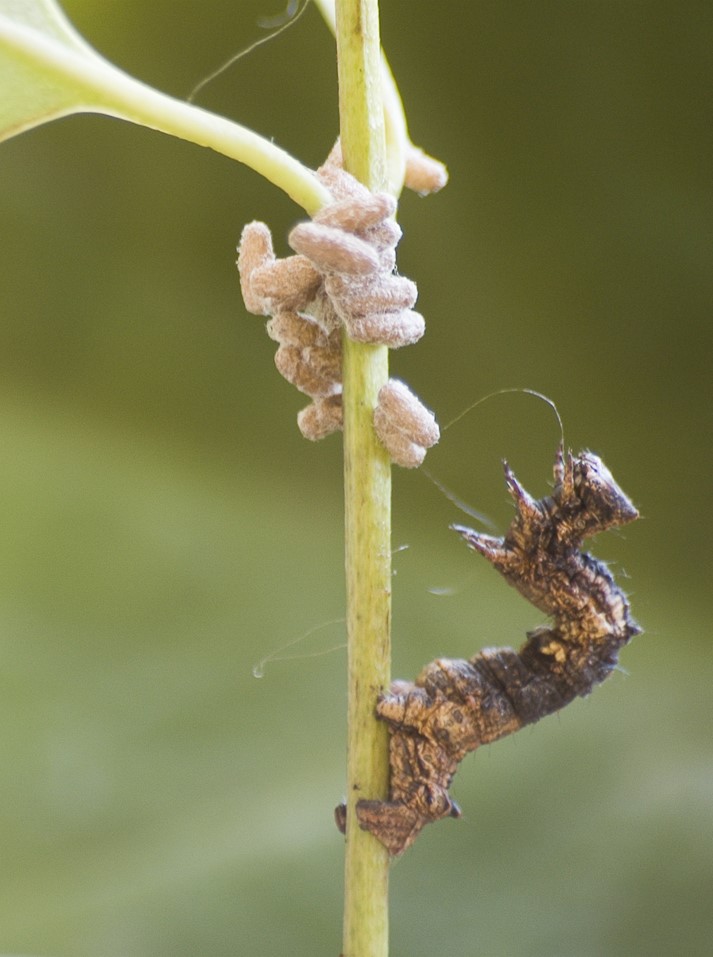
A Female Glyptapanteles Wasp
- 1. Appearance: Glyptapanteles wasps are small insects, typically measuring around 2-3 millimeters in length. They have a slender body with a black or dark brown coloration. The wings are transparent and may have a slightly iridescent sheen.
- 2. Life cycle: The life cycle of Glyptapanteles wasps involves parasitism of other insects, particularly caterpillars. The female wasp lays her eggs inside the body of a caterpillar host. Each female wasp can lay multiple eggs, usually injecting them into different caterpillars.
- 3. Parasitic behavior: Once the Glyptapanteles eggs hatch, the wasp larvae start to feed on the internal tissues of the caterpillar. Interestingly, these wasp larvae manipulate the behavior of the host caterpillar to protect themselves and ensure their survival. They release chemicals that alter the caterpillar's immune response and suppress its natural defenses.
- 4. Cocoon formation: After feeding and growing inside the caterpillar for a certain period, the Glyptapanteles larvae eventually emerge from the host's body and spin individual silk cocoons nearby. These cocoons are usually found attached to plants or other structures in the surrounding environment.
- 5. Number of offspring: A single Glyptapanteles wasp can produce dozens to hundreds of offspring, depending on the species. Each cocoon typically contains one wasp pupa, which will develop into an adult wasp over time.
- 6. Ecological importance: Glyptapanteles wasps play an essential role in natural ecosystems as natural enemies of caterpillars. By parasitizing and controlling caterpillar populations, they help maintain ecological balance and prevent excessive herbivory.
- 7. Research significance: Scientists have studied Glyptapanteles wasps extensively due to their unique parasitic behavior and manipulation of host behavior. These wasps have provided valuable insights into the interactions between parasites and their hosts, as well as the mechanisms behind behavioral manipulation. It's important to note that there are many species of Glyptapanteles wasps, and specific details may vary among them. Further research or consultation with entomologists specializing in parasitic wasps can provide more in-depth information about a particular species or its behavior in Costa Rica.