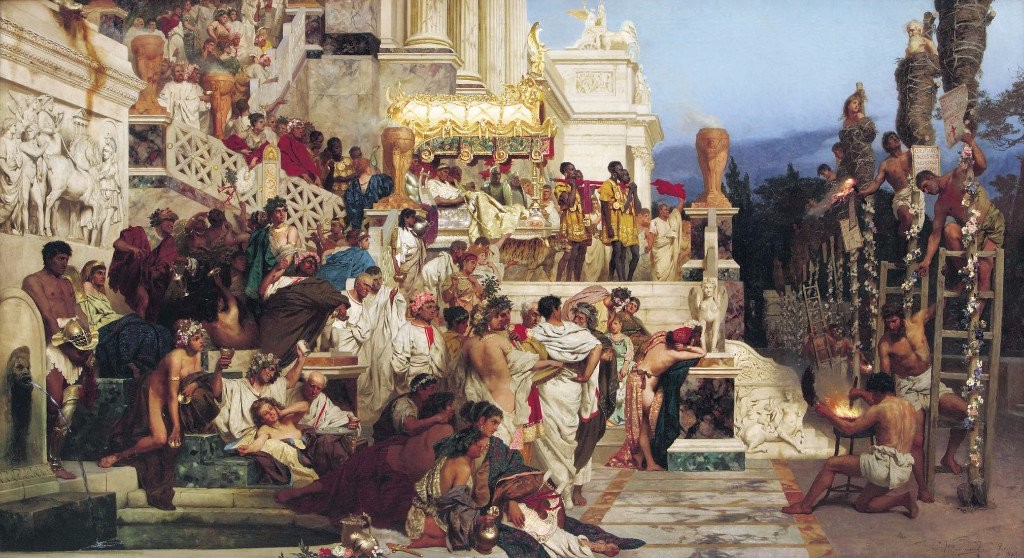
Master As A Slave
The Romans had a celebratory day once in a year called saturnalia where the roles of master and slave were reversed.
- 1. Origins: Saturnalia dates back to the Roman Republic and was originally celebrated as a single day on December 17th. Over time, the festival expanded to a week-long celebration, lasting from December 17th to December 23rd.
- 2. Meaning: Saturnalia was a time of feasting, gift-giving, and revelry. It was a period of social equality, where slaves were temporarily freed from their duties and could enjoy the same privileges as their masters.
- 3. Customs: During Saturnalia, Romans engaged in various customs and traditions, including decorating their homes with greenery, exchanging gifts, holding banquets, and participating in public festivities such as processions and games.
- 4. Role Reversal: One of the key aspects of Saturnalia was the concept of role reversal, where social norms were temporarily overturned. Slaves were allowed to wear their masters' clothing, and masters would serve their slaves at banquets.
- 5. Feasting: Feasting was a central part of Saturnalia, with lavish banquets held in homes and public spaces. Romans would indulge in rich foods and drinks, including wine, honeyed cakes, and exotic delicacies.
- 6. Gift-Giving: Exchanging gifts was a common practice during Saturnalia. Gifts ranged from simple tokens to more elaborate presents, and it was considered a gesture of goodwill and friendship.
- 7. Public Celebrations: In addition to private celebrations, Saturnalia also included public festivities such as chariot races, theatrical performances, and gladiatorial contests. These events were held in honor of Saturn and were enjoyed by people of all social classes.
- 8. Legacy: Although Saturnalia was eventually Christianized and replaced by Christmas as the primary winter holiday in many parts of the Roman Empire, its traditions and customs influenced modern Christmas celebrations. Elements such as gift-giving, feasting, and decorations have their roots in the ancient festival of Saturnalia.
- 9. Symbolism: Saturnalia was seen as a time of renewal and rebirth, symbolizing the end of the old year and the beginning of a new agricultural cycle. It was a time to celebrate abundance, fertility, and the promise of a bountiful harvest in the coming year. In conclusion, Saturnalia was a joyous and festive celebration in ancient Rome that emphasized community, generosity, and merriment. Its traditions and customs continue to resonate in modern holiday celebrations, making it a fascinating cultural event with enduring significance.