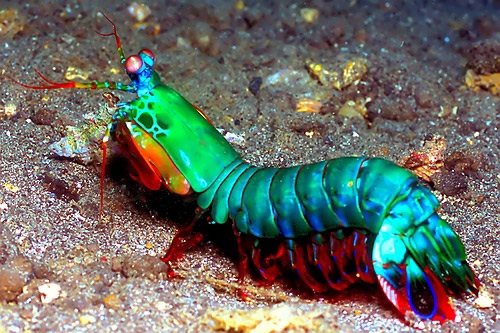
The Mantis Shrimp
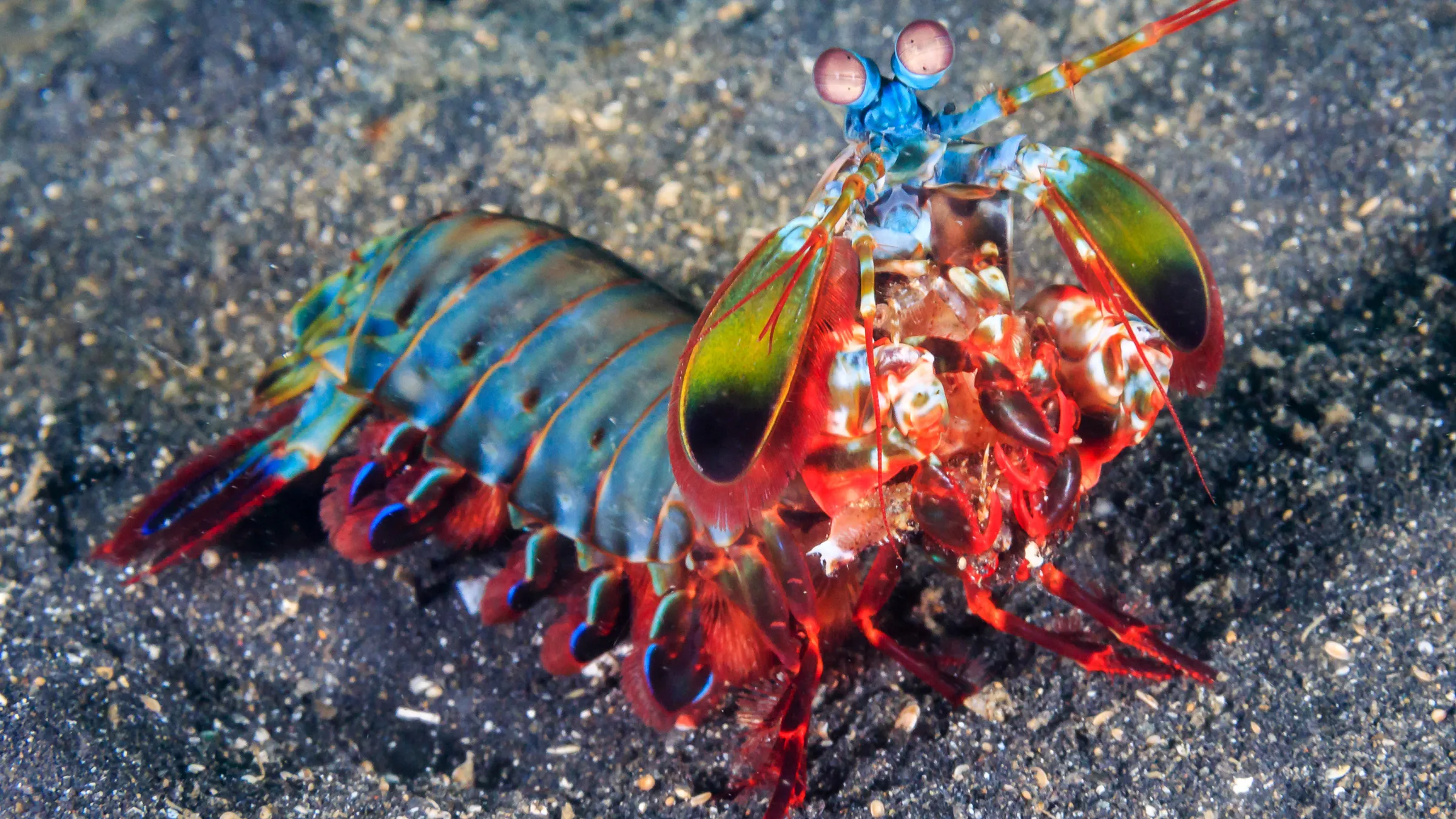
- 1. Diversity: There are over 450 known species of mantis shrimp, making them one of the most diverse groups of marine organisms. They can be found in tropical and subtropical waters around the world.
- 2. Appearance: Mantis shrimp have a distinctive appearance with elongated bodies and large, powerful claws. Their claws, also known as raptorial appendages, are used for hunting and defense.
- 3. Hunting skills: Mantis shrimp are highly skilled hunters and have some of the fastest and most powerful strikes in the animal kingdom. They can deliver lightning-fast punches with their claws, reaching speeds of up to 50 miles per hour (80 kilometers per hour). This incredible speed allows them to stun or kill their prey, which includes fish, crabs, and mollusks. 4. Vision: Mantis shrimp have complex and highly advanced visual systems. They have compound eyes that can detect a wide range of colors, including ultraviolet light. Their eyes are also capable of seeing polarized light, which helps them navigate and locate prey.
- 5. Strength: The claws of mantis shrimp are incredibly strong and can exert immense force. They are capable of breaking through shells and even aquarium glass. Some species have been known to strike with a force equivalent to a bullet shot from a .22 caliber rifle.
- 6. Coloration: Mantis shrimp come in a variety of vibrant colors, including shades of green, blue, red, and orange. These colors serve as a warning to potential predators, indicating that they are venomous and should be avoided.
- 7. Burrowing behavior: Many species of mantis shrimp are burrowers and spend their time hiding in burrows they create in the sand or coral rubble. They use their powerful claws to dig and maintain their burrows, which provide them with shelter and protection.
- 8. Reproduction: Mantis shrimp have complex mating behaviors. Some species engage in elaborate courtship rituals, while others exhibit aggressive behaviors. After mating, the female mantis shrimp carries the fertilized eggs until they hatch, at which point the larvae are released into the water.
- 9. Conservation status: While specific data on the conservation status of mantis shrimp species is limited, they are generally considered to be abundant in their habitats. However, habitat destruction, pollution, and overfishing can pose threats to their populations.
- 10. Scientific research: Mantis shrimp have attracted significant scientific interest due to their unique visual systems, powerful strikes, and diverse adaptations. They have been studied for potential applications in materials science, optics, and engineering. Understanding and protecting mantis shrimp and other underwater creatures is crucial for maintaining the balance of marine ecosystems and preserving the biodiversity of our oceans.