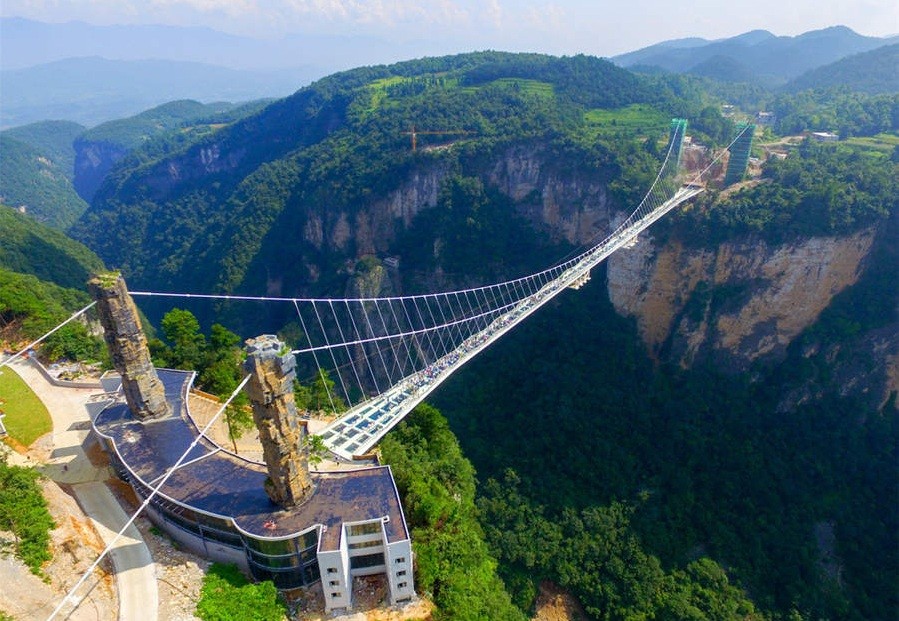
Zhangjiajie Grand Canyon
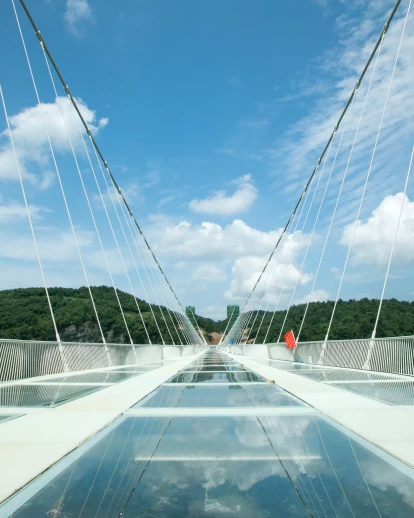
- 1. Zhangjiajie Grand Canyon Glass Bridge: Located in Zhangjiajie, Hunan province, the Zhangjiajie Grand Canyon Glass Bridge is one of the most famous glass bridges in China. It spans across the stunning Zhangjiajie Grand Canyon and offers thrilling views of the surrounding natural landscape.
- 2. World's Longest and Highest: The Zhangjiajie Grand Canyon Glass Bridge holds several records. It is the longest glass-bottomed suspension bridge in the world, measuring about 430 meters (1,410 feet) in length. It is also positioned at a height of approximately 300 meters (984 feet) above the canyon floor.
- 3. Transparent Flooring: The glass bridge's most striking feature is its transparent flooring, allowing visitors to see through to the depths below as they walk across. The floor is composed of multiple layers of reinforced glass, which are specially treated for strength and durability.
- 4. Strength and Safety: Despite its delicate appearance, glass bridges are engineered to be incredibly strong and safe. The glass used is made from tempered materials capable of withstanding the weight of heavy loads, such as vehicles or large crowds.
- 5. Unique Design Elements: Many glass bridges in China incorporate unique design elements to enhance the experience. For example, the Zhangjiajie Grand Canyon Glass Bridge features a series of glass panels with decorative patterns and LED lights, creating a stunning visual effect at night.
- 6. Tourism Attractions: Glass bridges in China are often built in scenic areas, complementing the natural beauty and attracting tourists. They offer unforgettable views and a thrilling experience for visitors, who can engage with the landscape in a unique way.
- 7. Engineering Feats: Building glass bridges involves complex engineering to ensure the structure's safety and stability. Factors such as wind resistance, seismic activity, and weight distribution must be carefully considered and accounted for during construction.
- 8. Glass Bridge Boom: China has experienced a boom in glass bridge construction over the past decade. This trend started with the world's first commercial glass-bottomed bridge at the Shiniuzhai National Geological Park in Hunan province. Since then, numerous glass bridges have been built across the country, becoming popular tourist attractions.
- 9. Symbol of Modern China: China's glass bridges have come to symbolize the country's engineering prowess, architectural innovations, and push for unique tourist attractions. They showcase China's determination to develop cutting-edge structures and its growing tourism industry.
- 10. Tourism Boost: The construction of glass bridges has often provided a significant boost to local tourism and economies. The combination of natural beauty and thrilling experiences draws both domestic and international visitors, contributing to local businesses and communities.